Overfly alerts
Warn you about upcoming ISS and satellite passes so the device can become part of the day instead of just a static object.
Astro Arrow is a DiY desktop real-time space object tracker that lets you track satellites, planets, stars, comets, and even black holes by rotating it's mechanical assembly, to point the arrow at the selected object.
Its source code and hardware designs are available for free, so you can build your own, customize it, and help improve it over time.
Astro Arrow's main feature is real-time tracking of space objects. It also displays useful information on its E-Paper display and LED bar, so it can do more than just point.
Warn you about upcoming ISS and satellite passes so the device can become part of the day instead of just a static object.
Show accurate real-time data such as distance from the observer, target name, and current tracking state.
Display short astronomy facts and other small bits of information when the tracker is idle.
Astro Arrow is a DIY that requires basic skills and tools. The main work is printing the parts, soldering the THT components onto our PCB, assembling the mechanism, and running setup and calibration.
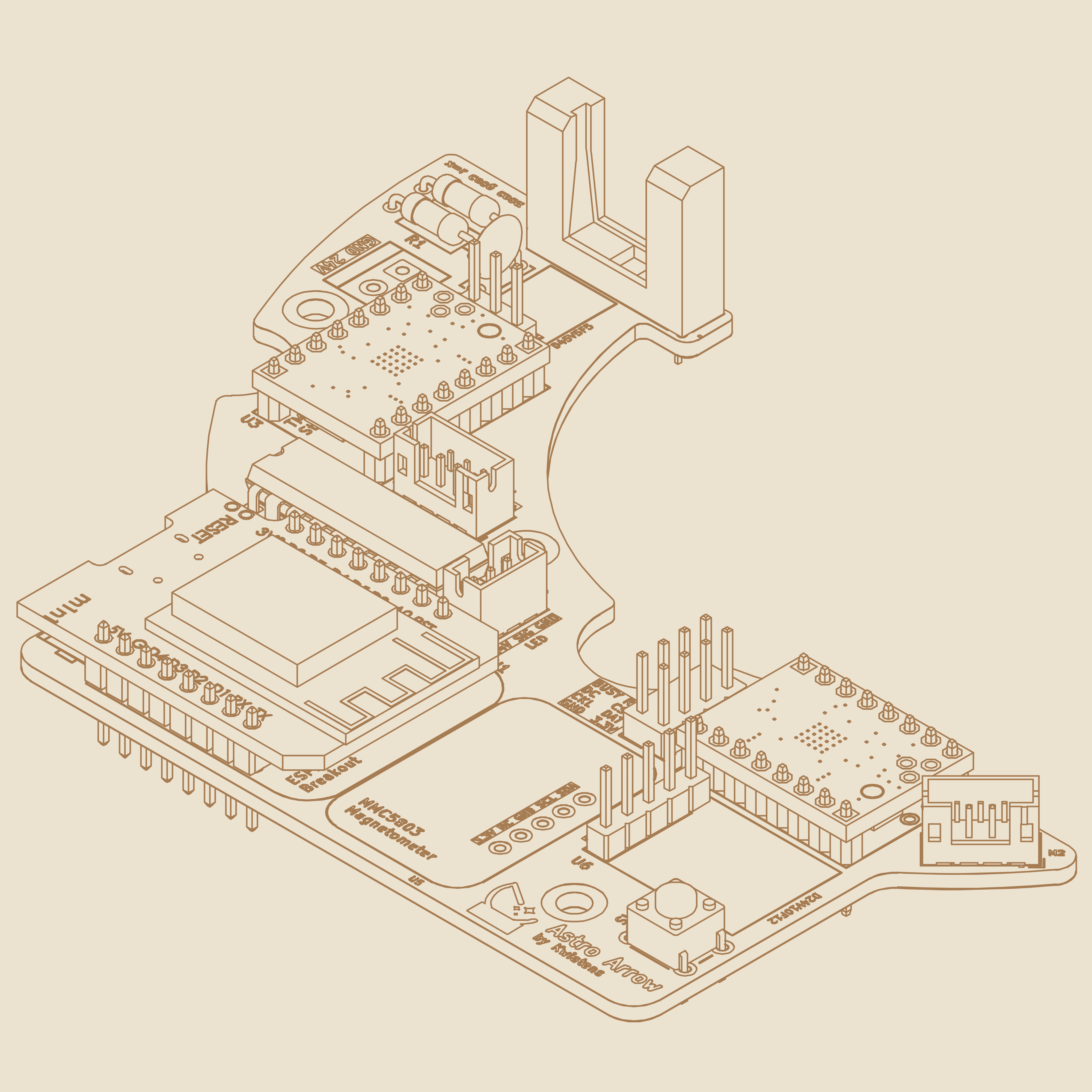
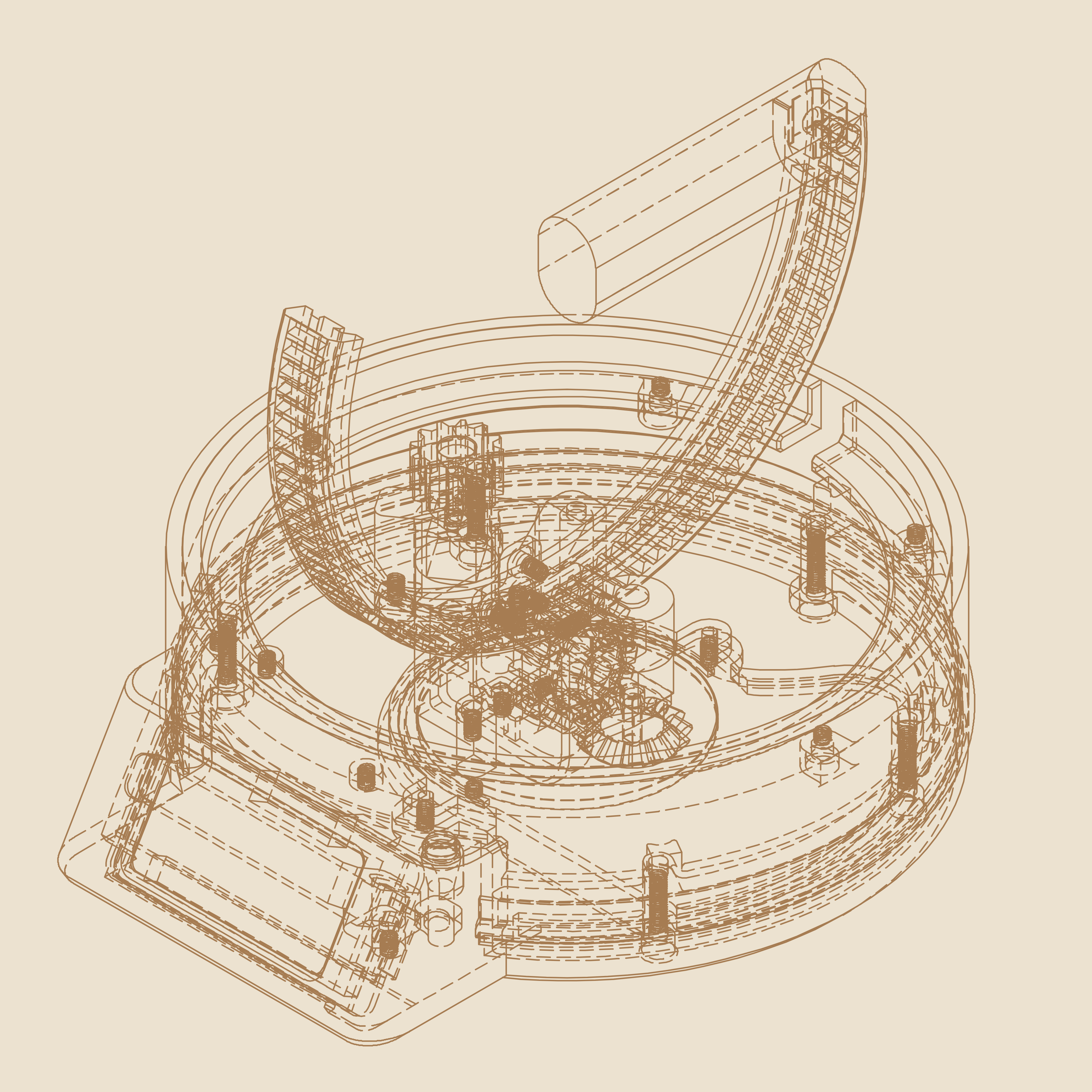
The shell, mounts, gears, and the rest of the mechanism are designed to be fully 3D printable on a regular FDM printer. You do not need a large machine or unusual materials to make the printed parts.
Regular PLA and PET-G are enough, and the minimum required build volume is about 150 x 180 x 50 mm. That means smaller printers like the Bambu Lab A1 mini or Prusa Mini will work.
Astro Arrow is built to be improved by the community. The firmware and software source code, along with the hardware designs, are available for free under a non-commercial license, so anyone can see how it works, make their own tweaks, and help improve it over time.